Remote GP Consultation Liverpool Guide
When you wake up feeling unwell, need advice about a recurring problem, or simply cannot get to a surgery during the working day, a remote GP consultation Liverpool patients can access quickly can make a real difference. For many people, the issue is not whether they need medical advice. It is whether they can get it at a time that fits around work, childcare, study, or travel.
Remote appointments have become a practical option for adults who want straightforward access to an experienced doctor without unnecessary delay. They are not a replacement for every type of care, and they should never be presented that way. But for many common health concerns, they offer a sensible, efficient route to advice, treatment, and next steps.
What a remote GP consultation in Liverpool actually involves
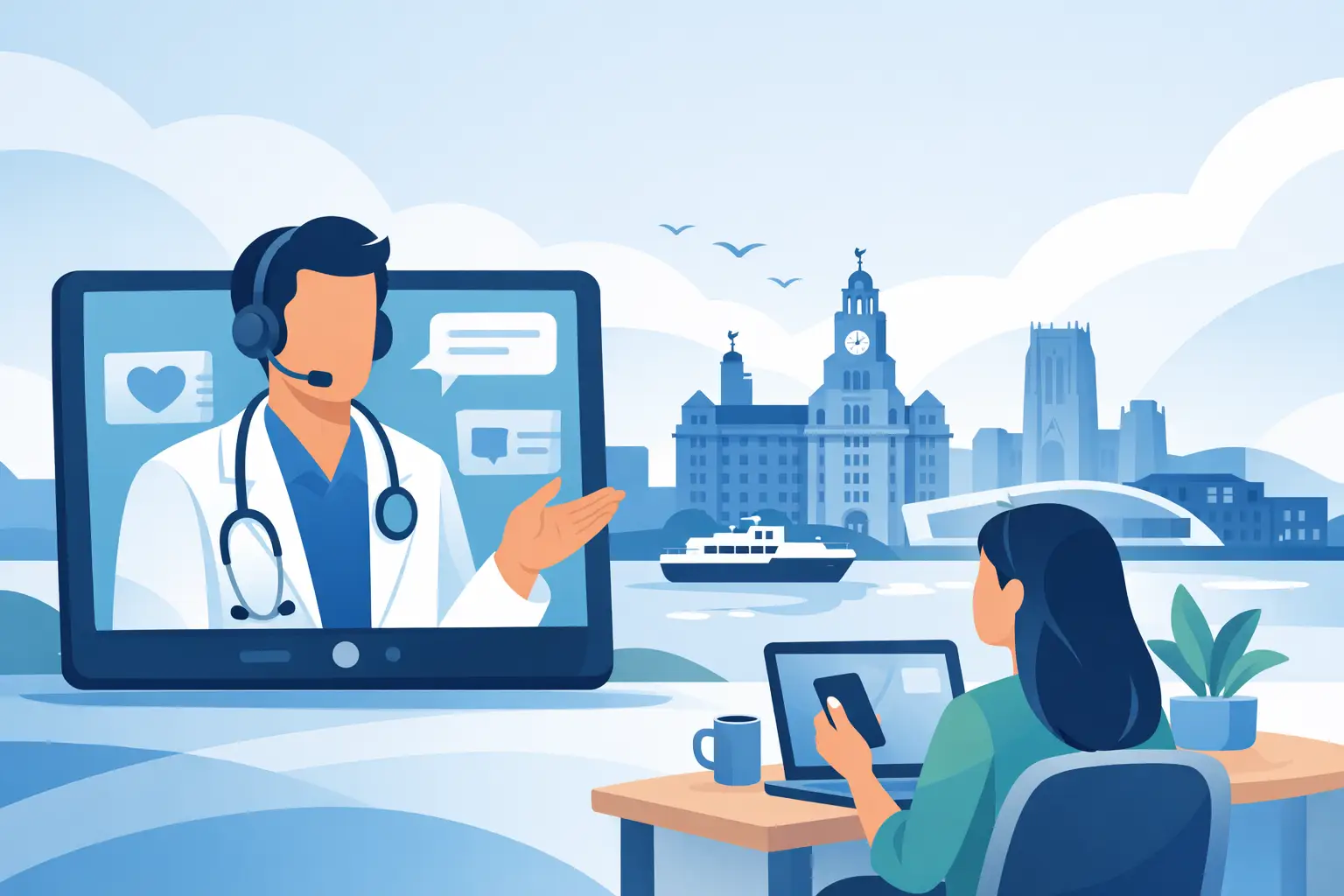
A remote GP consultation in Liverpool is usually carried out by telephone or video. The purpose is the same as a face-to-face appointment - to discuss symptoms, review medical history, assess what may be going on, and agree a plan.
In a well-run private practice, this process should feel clear and personal rather than rushed. You explain the problem, the doctor asks focused questions, and together you decide what happens next. That may mean reassurance and self-care advice, a private prescription, a fit note, further tests, a referral, or an in-person review if an examination is needed.
For patients, the benefit is obvious. You do not need to travel into the city centre, sit in a waiting room, or rearrange half your day to get medical input. That matters if you are fitting healthcare around a meeting-heavy job, nursery pick-up, lectures, or an already full week.
Why remote GP consultation Liverpool services suit busy lives
The main reason people choose remote appointments is convenience, but convenience on its own is not enough. The service still needs to be clinically sound, responsive, and easy to access.
For working professionals, a remote consultation can mean speaking to a GP during a break or after work instead of waiting days for a suitable appointment. For parents, it can remove the challenge of getting childcare just to discuss a health concern that may not require an examination. For students and city-centre residents, it can provide quicker medical advice without the usual disruption.
There is also the issue of timing. Health concerns rarely appear neatly within standard surgery hours. Symptoms can worsen in the evening. A medication question may become urgent on a Saturday morning. A chest infection, skin flare-up, or urinary problem does not care that your week is already full. Access outside the usual nine-to-five model is often what turns a stressful situation into a manageable one.
What can be treated remotely
A remote consultation works well when a doctor can make a safe assessment from your history, your symptoms, and in some cases visual information over video. That covers more than many people expect.
Common examples include coughs, colds, sore throats, hay fever, asthma reviews, skin complaints, headaches, travel advice, medication queries, contraception discussions, minor infections, stomach upsets, and follow-up appointments. It can also be useful for discussing test results, ongoing conditions, stress-related symptoms, or whether a symptom pattern needs further investigation.
The key point is that remote care is not just for very minor issues. It can also be the right first step for more complex concerns, because a GP can decide whether you need treatment, monitoring, tests, referral, or a same-day face-to-face review.
That said, there are limits. If you need a physical examination of the abdomen, chest, joints, ears, or throat, a remote appointment may only take you so far. The value is in getting a prompt clinical opinion and a sensible next action rather than waiting and wondering.
When remote care may not be the right choice
Good medical care includes knowing when not to keep things virtual. If you have severe chest pain, significant breathing difficulty, signs of stroke, heavy bleeding, sudden confusion, or any medical emergency, urgent emergency care is the right route.
There are also situations where a GP may advise an in-person appointment because examination matters. A new lump, persistent abdominal pain, a worrying rash in a child, severe ear pain, or symptoms that require observations may need to be seen directly.
This is not a weakness of remote medicine. It is simply honest practice. The safest services are the ones that use remote appointments where appropriate and move quickly to face-to-face assessment, imaging, or referral when needed.
What patients should look for in a remote GP service
Not all remote services feel the same from a patient point of view. Speed matters, but so does continuity and clinical judgement.
A good service should make it easy to book, explain pricing clearly, and offer appointments at times that work for real people, including evenings or weekends. It should also be clear who you are speaking to and what happens if you need prescriptions, tests, onward referral, or an in-person review.
Continuity is often overlooked. Many patients do not want to explain their story from scratch every time they seek help. A smaller, family-run clinic with experienced doctors can offer something valuable here - a more personal and accountable approach, where your care feels joined up rather than transactional.
That is especially helpful if you are dealing with recurring infections, hormonal concerns, skin problems, anxiety symptoms, blood pressure issues, or anything else that benefits from follow-up rather than one-off advice.
The value of speed, without feeling rushed
One of the main frustrations in primary care is not just waiting for an appointment. It is the uncertainty that comes with delay. Symptoms can linger, anxiety can build, and small issues can turn into larger ones if they are left too long.
A remote consultation gives patients a quicker route to clarity. Sometimes the outcome is simple reassurance. Sometimes it is treatment started sooner. Sometimes it is identifying that you need blood tests, imaging, or a physical examination before things become more difficult.
This is where an operationally responsive service really matters. If the appointment is prompt but the next steps are vague or slow, the benefit is lost. Patients need a service that can move from consultation to action in a practical timeframe.
In Liverpool, that can be particularly useful for people balancing work in the city, commuting, or managing family life across Merseyside. The less friction involved in getting care, the more likely people are to seek help early.
Remote consultations and affordability
Private care can sometimes be misunderstood as something only for those looking for premium extras. In reality, many patients are simply looking for accessible, reasonably priced GP care when timing matters.
A remote appointment can often be a cost-conscious choice because it saves time as well as travel. If you avoid taking unnecessary time off work, paying for parking, or arranging childcare, the overall value becomes clearer.
Transparent pricing also matters. People want to know what they are paying for and whether they may need additional services such as tests, prescriptions, letters, or scans. Honest communication builds trust, especially for patients who are choosing private GP care for practical reasons rather than luxury.
At a clinic such as SLM GP, that balance of affordability, responsiveness, and personalised care is exactly what many patients are looking for. They want experienced doctors, straightforward access, and a service that respects both their health and their time.
How to prepare for a remote GP consultation Liverpool patients book
A little preparation can make a remote appointment more useful. Before your call or video consultation, think about when the problem started, what has changed, any medicines you take, and whether you have tried anything already. If your symptoms come and go, it helps to be specific about timing, triggers, and severity.
Choose a quiet place if possible. If the appointment is by video and the issue is visible, such as a skin complaint, decent lighting can help. Keep any recent test results, medication packets, or blood pressure readings nearby if they are relevant.
Most importantly, be open about what you are worried about. Many consultations become more effective when patients say the thing they are concerned may be serious, embarrassing, or easy to dismiss. A good GP would rather hear that clearly than have you end the call still uncertain.
A practical option, not a compromise
Remote GP care works best when it is treated as a practical part of modern primary care rather than a lesser version of face-to-face medicine. For the right problem, at the right time, with the right follow-up, it can be efficient, reassuring, and genuinely patient-friendly.
If your schedule makes traditional appointments hard to access, or you simply want prompt medical advice without unnecessary delay, remote care may be the most sensible place to start. The best services keep it simple: speak to an experienced doctor, get clear advice, and know what happens next.